
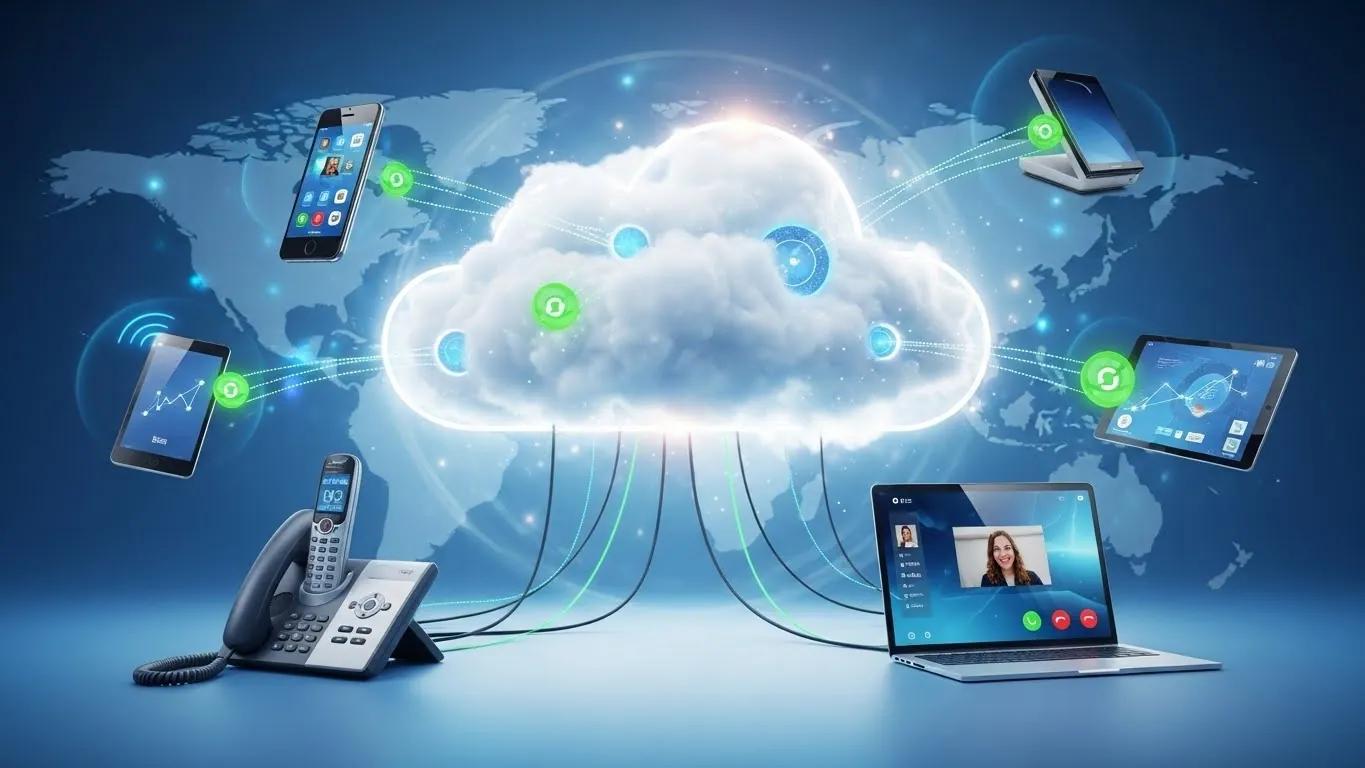
A cloud-based phone system uses Voice over Internet Protocol technology and the internet to transmit voice communications and data without requiring expensive on-premises hardware. Unlike traditional phone systems that rely on physical PBX equipment and copper wires, Cloud-Based Services deliver calls through secure data centers operated by third-party providers accessible from any internet-connected device. This modern business communication solution offers enhanced flexibility, cost savings, and advanced features that transform how companies handle customer interactions and internal collaboration.
How Cloud-Based Phone Systems Work
Cloud phone systems convert analog voice signals into digital data packets that travel over your internet connection rather than traditional phone lines. When an employee makes a call using an IP desk phone or softphone application, the voice data gets digitized and transmitted through your internet connection to the cloud service provider’s data centers. The provider’s servers then route the call to its destination through either VoIP networks or the public switched telephone network, converting the data packets back into voice signals the recipient can hear.
This entire process happens in milliseconds, creating real-time communication that users cannot distinguish from traditional phone calls. The cloud provider maintains all hardware, software, and infrastructure offsite in secure facilities, eliminating the need for businesses to purchase, install, or maintain complex on-premises equipment. Companies simply need internet-connected devices with microphones and speakers, plus a reliable broadband connection to access full cloud phone system capabilities.
Key Components of Cloud-Based Services for Business Communication
Modern cloud-based services integrate multiple communication channels beyond voice calls, creating unified platforms that streamline business operations. These comprehensive systems typically include auto attendants that greet callers and route them to appropriate departments without human intervention, saving time and improving customer experience. Call queuing ensures no customer call goes unanswered during busy periods, automatically placing callers in organized waiting lines with estimated wait times.
- Video conferencing capabilities supporting 100 to 500 participants depending on service tier
- SMS and MMS messaging integrated directly into the business phone platform
- Voicemail transcription services that convert audio messages into text emails
- Call recording features for quality assurance, training, and compliance requirements
- CRM software integrations synchronizing customer data across all communication touchpoints
- Mobile and desktop applications enabling work from anywhere connectivity
- Interactive Voice Response menus guiding callers through self-service options
DataMaticsLab emphasizes that these cloud-based services create centralized communication hubs where all customer interactions flow through one easy-to-use system of record. This integration allows managers to monitor, analyze, and optimize team performance using real-time analytics and historical reporting tools.
Advantages of Cloud-Based Phone Systems Over Traditional PBX
Cost Savings and Predictable Expenses
Cloud-based services eliminate significant upfront capital expenditures required for traditional PBX hardware, installation, and maintenance. Businesses pay predictable monthly subscription fees typically ranging from $15 to $40 per user depending on feature requirements and service tier. This pay-as-you-go pricing model scales easily as companies grow or shrink, with no expensive equipment purchases when adding new employees.
Geographic Flexibility and Remote Work Support
Employees can make and receive business calls from any location with internet access using computers, smartphones, or tablets. This geographic flexibility proved essential during the global pandemic and remains valuable for distributed teams and remote workers. Calls automatically forward to mobile devices if internet connectivity fails, ensuring business continuity even during network outages.
Advanced Features Without Additional Hardware
Cloud systems provide sophisticated calling features that would require expensive add-ons or be completely unavailable with traditional phone systems. Call monitoring, whisper coaching, and barging capabilities help supervisors train agents in real time without customers knowing. Hot desking allows employees to log into any desk phone company-wide using their credentials, accessing personal settings and call history instantly.
Understanding the Technology Behind Cloud-Based Services
When someone calls your business number, their voice travels through a complex but lightning-fast process managed entirely by cloud infrastructure. The caller’s phone converts voice into analog signals that reach the cloud provider’s network through either traditional phone lines or VoIP connections. Cloud servers process configured call rules, checking business hours, caller ID information, and routing preferences before directing the call.
For internal calls between employees using the same cloud system, data never touches the public phone network at all. Voice packets travel entirely over the internet through encrypted connections between users, reducing costs and improving call quality. The system’s ability to handle high call volumes through SIP trucking technology allows multiple simultaneous calls over a single internet connection, effectively eliminating busy signals during peak hours.
Choosing the Right Cloud-Based Phone System Provider
Evaluating cloud-based services requires understanding your business’s specific communication needs, budget constraints, and growth projections. Entry-level plans starting around $15 to $20 per user monthly provide basic calling features suitable for small teams with straightforward requirements. Mid-tier options at $25 to $30 per user add advanced capabilities like unlimited video conferencing, call analytics, and CRM integrations.
- Assess current and projected user counts to determine per-seat pricing tiers
- Identify must-have features versus nice-to-have capabilities to avoid overpaying
- Verify integration compatibility with existing business software like Microsoft Teams or Salesforce
- Test call quality during free trials paying attention to latency and audio clarity
- Review service level agreements guaranteeing uptime percentages and support response times
DataMaticsLab recommends businesses consider providers offering flexible pricing structures that allow different plan levels for various employee roles. Sales teams might need advanced analytics and call recording, while administrative staff require only basic calling features at lower price points.
Potential Challenges with Cloud-Based Phone Systems
While cloud-based services offer numerous advantages, businesses must address certain limitations before transitioning from traditional systems. Reliable, high-speed internet connectivity becomes absolutely critical since all communications depend on network availability. Companies in areas with inconsistent broadband access or frequent outages should implement backup internet connections or failover systems.
Location data transmitted during emergency calls may be less precise than traditional landlines that pinpoint exact addresses automatically. Cloud systems typically provide approximate locations based on registered business addresses, potentially delaying emergency response in large buildings. Legacy analog equipment like intercoms, paging systems, and door buzzers often cannot interface directly with cloud phone systems without additional adapters.
Latency and choppy audio can occur in areas with weak Wi-Fi signals or network congestion during peak usage periods. Businesses should conduct thorough network assessments before implementing cloud phone systems, ensuring adequate bandwidth and quality of service configurations prioritize voice traffic.
Frequently Asked Questions About Cloud-Based Phone Systems
What Is a Cloud-Based Phone System?
A cloud-based phone system uses internet connections and VoIP technology to deliver voice communications through remote data centers without requiring on-premises PBX hardware.
How Much Do Cloud-Based Services for Phone Systems Cost?
Cloud phone systems typically cost $15 to $40 per user monthly depending on features, with discounts for annual commitments and larger teams.
Can Cloud Phone Systems Work During Internet Outages?
Yes, most systems automatically forward calls to mobile phones or alternate numbers when internet connectivity fails, ensuring business continuity.
What Equipment Is Needed for Cloud-Based Phone Systems?
You need internet-connected devices like IP desk phones, computers, or smartphones with softphone apps, plus reliable broadband internet.
Do Cloud Phone Systems Integrate with CRM Software?
Yes, leading cloud phone systems integrate with popular CRM platforms like Salesforce, HubSpot, and Zendesk for unified customer data.
Are Cloud-Based Phone Systems Secure?
Cloud providers maintain enterprise-grade security with encrypted connections, secure data centers, and compliance with industry regulations.
Can I Keep My Existing Business Phone Numbers?
Yes, virtually all cloud phone system providers support number porting, allowing you to transfer existing business numbers to the new system.