
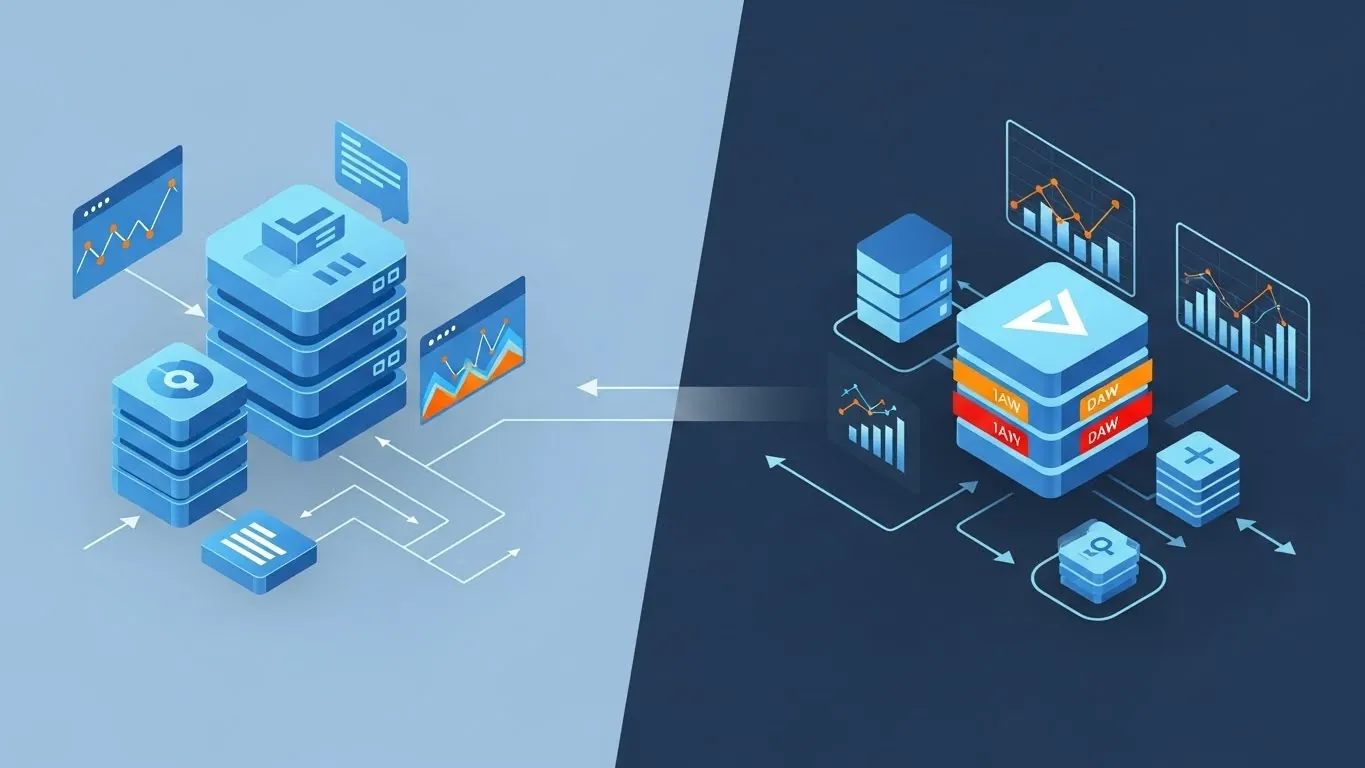
Modern organizations collect data from countless sources, yet raw data alone does not drive better decisions. Without structure and analysis, information remains fragmented and underused. Data Warehousing and business intelligence work together to transform scattered data into meaningful insights that support strategy, performance tracking, and growth.
Understanding how data warehousing and business intelligence function together helps organizations build reliable analytics systems, improve visibility, and make confident, data-driven decisions.
Understanding Data Warehousing in Modern Data Environments
A data warehouse is a centralized system designed to store large volumes of structured and historical data collected from multiple sources. Unlike operational databases, a data warehouse is optimized for querying, reporting, and analysis rather than daily transactions. This design allows organizations to analyze data without disrupting operational systems.
In modern environments, data flows from applications, cloud platforms, and external services. Without consolidation, data becomes inconsistent and difficult to analyze.
By implementing a data warehouse, organizations create a single source of truth that supports reliable, scalable analytics across teams and departments.
What Business Intelligence Means for Organizations
Business intelligence refers to the tools, processes, and technologies used to analyze data and present actionable insights. BI transforms stored data into dashboards, reports, and visualizations that help users understand performance, trends, and opportunities.
Business intelligence typically includes:
- Reporting and dashboard creation
- Data visualization and exploration
- Performance monitoring and KPIs
- Trend and comparative analysis
These BI capabilities enable decision-makers to interpret data quickly. Instead of manual spreadsheets, users gain real-time access to insights that support faster and more informed decisions.
Key Differences Between Data Warehousing and Business Intelligence
Although closely connected, data warehousing and business intelligence serve distinct roles within the analytics lifecycle. Understanding their differences helps organizations design balanced and effective data strategies.
Purpose and Function
Data warehousing focuses on storing and organizing data. Business intelligence focuses on analyzing and presenting that data. A data warehouse prepares data, while BI tools interpret and visualize it.
Data Handling and Structure
Data warehouses store structured, cleaned, and historical data. Business intelligence works on curated datasets optimized for analysis. Clean warehouse data ensures BI outputs remain accurate and consistent.
Tools and Technologies
Data warehousing relies on databases, ETL processes, and storage platforms. Business intelligence uses visualization, reporting, and analytics tools. Each layer requires different technologies but depends on the other to function effectively.
Output and Results
The output of data warehousing is reliable, query-ready data. The output of BI is insight, trends, and actionable intelligence. Together, they support informed decision-making.
How Data Warehousing Supports Business Intelligence
Business intelligence depends on high-quality data to deliver accurate insights. A data warehouse provides the structured, historical foundation that BI tools need to perform effectively. Without a data warehouse, BI systems rely on fragmented and inconsistent sources.
By centralizing data, data warehousing ensures BI reports use consistent definitions and metrics. This eliminates conflicting dashboards across departments.
Organizations working with platforms like DataMaticsLab rely on strong data warehouse architectures to power scalable and trustworthy business intelligence solutions.
Business Benefits of Combining Data Warehousing and BI
When data warehousing and business intelligence are integrated, organizations gain measurable business value. This combination improves visibility, efficiency, and strategic alignment across the enterprise.
Key benefits include:
- Faster access to reliable insights
- Improved reporting accuracy and consistency
- Better trend and performance analysis
- Enhanced decision-making confidence
These benefits reduce reliance on manual data preparation. Teams spend more time analyzing results and less time reconciling conflicting numbers across systems.
Common Challenges Without Data Warehousing and BI
Organizations that lack proper data warehousing and BI capabilities face significant challenges. Data remains siloed, reporting is slow, and decisions rely on incomplete information. These issues become more severe as data volume grows.
Common challenges include:
- Conflicting metrics across departments
- Manual and error-prone reporting processes
- Limited historical data visibility
- Slow response to business changes
Implementing data warehousing and BI addresses these challenges by providing structure, governance, and analytical clarity.
Why Data Warehousing and BI Are Essential for Growth
As organizations scale, data complexity increases. Data warehousing and business intelligence provide the foundation needed to manage growth intelligently. They enable leaders to monitor performance, identify opportunities, and respond quickly to market changes.
Advanced analytics, forecasting, and performance optimization depend on reliable data infrastructure. Without it, growth decisions become risky and reactive.
With the right architecture, data warehousing and BI turn data into a long-term strategic asset rather than an operational burden.
Frequently Asked Questions About Data Warehousing and Business Intelligence
What Is the Difference Between Data Warehousing and Business Intelligence?
Data warehousing stores and organizes data, while business intelligence analyzes and visualizes that data to generate insights.
Can Business Intelligence Work Without a Data Warehouse?
It can, but results are often unreliable. A data warehouse provides consistent, high-quality data that BI tools need.
Is A Data Warehouse Part of Business Intelligence?
A data warehouse supports business intelligence but is a separate system focused on data storage and preparation.
Why Is a Data Warehouse Important For BI?
A data warehouse ensures BI reports use consistent, accurate, and historical data for reliable analysis.
Do Small Businesses Need Data Warehousing And BI?
Cloud solutions make data warehousing and BI accessible and cost-effective for small and growing businesses.